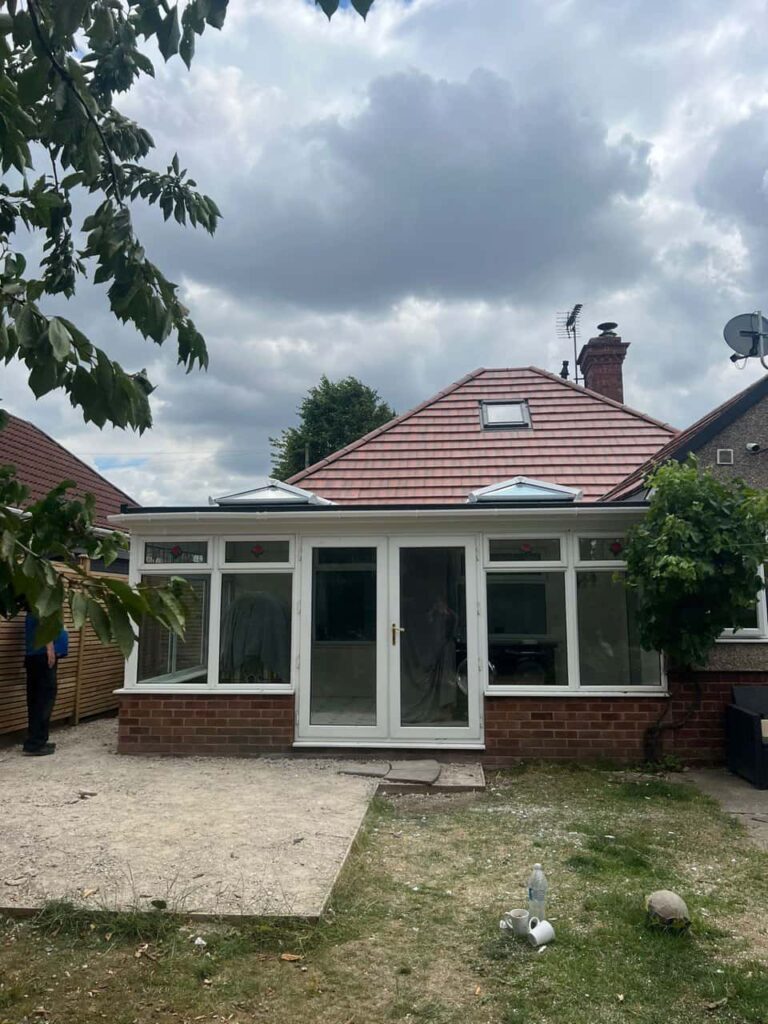
Sectional replacement involves removing damaged roofing materials from a specific area and rebuilding that part of the roof correctly. It is more extensive than a minor repair but less disruptive than replacing the complete roof covering.
This solution may be suitable when damage has affected one roof slope, a particular junction or a concentrated group of tiles, battens or underlay. The remaining roof must still be in a condition that can provide dependable protection.
Localised Storm or Impact Damage
Strong winds, falling debris and other isolated events can damage one section while leaving the rest of the roof largely unaffected. Tiles may be broken or displaced, while the underlay and battens beneath them may also become exposed or damaged.
Replacing the affected section allows all compromised materials to be removed rather than addressing only the most visible tiles. This creates a more complete and lasting repair.
Deteriorated Underlay and Battens
Tiles are only one part of a pitched roofing system. Underlay provides secondary protection from moisture, while battens support and secure the roof covering.
If water has entered through a damaged area, these concealed components may have deteriorated. Simply replacing the outer tiles would not resolve weakened battens or torn underlay. Opening the affected section enables the roofer to assess and replace damaged materials beneath the surface.
Problems Around Roof Junctions
Valleys, abutments, chimneys and changes in roof level are particularly vulnerable because they rely on carefully formed details to direct water away.
Where defects are concentrated around one junction, rebuilding that section may restore effective drainage without disturbing sound areas elsewhere. This can involve renewing tiles, underlay, flashing or other weatherproofing details as necessary.
Previous Repairs That Have Become Unreliable
A roof may develop an inconsistent patchwork after several isolated repairs. If these repairs are concentrated within one area, replacing the complete section can provide a more coherent solution.
This removes failing materials and allows the area to be reconstructed as one integrated part of the roofing system. It can also reduce the likelihood of new weaknesses developing between old repair patches.
Why the Cause Must Be Identified First
Replacing a damaged section will only be successful if the source of the problem is addressed. Water entering through defective flashing, poor drainage or damaged ridge details can travel beneath the covering before appearing elsewhere.
A professional inspection should therefore examine the roof above and around the visible damage. The condition of neighbouring tiles, fixings, mortar, flashing, underlay, battens and roof timbers may all need to be considered.
Without this wider assessment, a section could be renewed while the original source of water ingress remains unresolved.
When Sectional Replacement May Not Be Enough
Localised work is less suitable when deterioration is spread across several parts of the roof. Widespread tile failure, recurring leaks, extensive underlay damage or general movement can indicate that the roof is declining as a complete system.
Other warning signs include:
- Numerous slipped, cracked or porous tiles
- Leaks appearing in different rooms
- Sagging or uneven roof lines
- Deterioration across several roof slopes
- Repeated faults developing after earlier repairs
- Widespread damage to battens or structural timber
In these circumstances, replacing one section may simply postpone problems elsewhere. A complete assessment helps establish whether targeted work can provide a durable result or whether more comprehensive renewal is appropriate.
The Importance of Matching New and Existing Work
A sectional replacement must connect securely with the surrounding roof. Tiles need to be compatible, courses must remain properly aligned and water must be directed across the transition without finding a route beneath the covering.
Attention must also be given to fixings, ventilation and weatherproofing details. Professional workmanship is essential because weaknesses at the join between renewed and existing materials can otherwise create future leaks.
Acting Before Localised Damage Spreads
Roof damage often becomes more extensive when moisture is allowed to reach the underlying structure. Damp battens can weaken, underlay can deteriorate and timber may remain wet for prolonged periods.
Arranging an inspection when damage first becomes apparent can improve the likelihood that repairs remain confined to a manageable section. Delaying attention may allow a local defect to affect a much larger part of the roof.
Conclusion
Replacing a damaged roof section can prevent the need for complete re-roofing when the deterioration is genuinely localised and the surrounding roof remains serviceable. The success of this approach depends on identifying the cause, removing every compromised material and integrating the renewed section correctly with the existing roof.
LS Roofing Windsor provides professional roof inspections and repairs in Windsor, Berkshire. If part of your roof appears damaged or continues to cause problems, contact us to arrange an assessment and determine the most appropriate repair solution.
Call us on: 01753 251 592
Click here to find out more about LS Roofing Windsor
Click here to complete our contact form and see how we can help with your roofing needs.