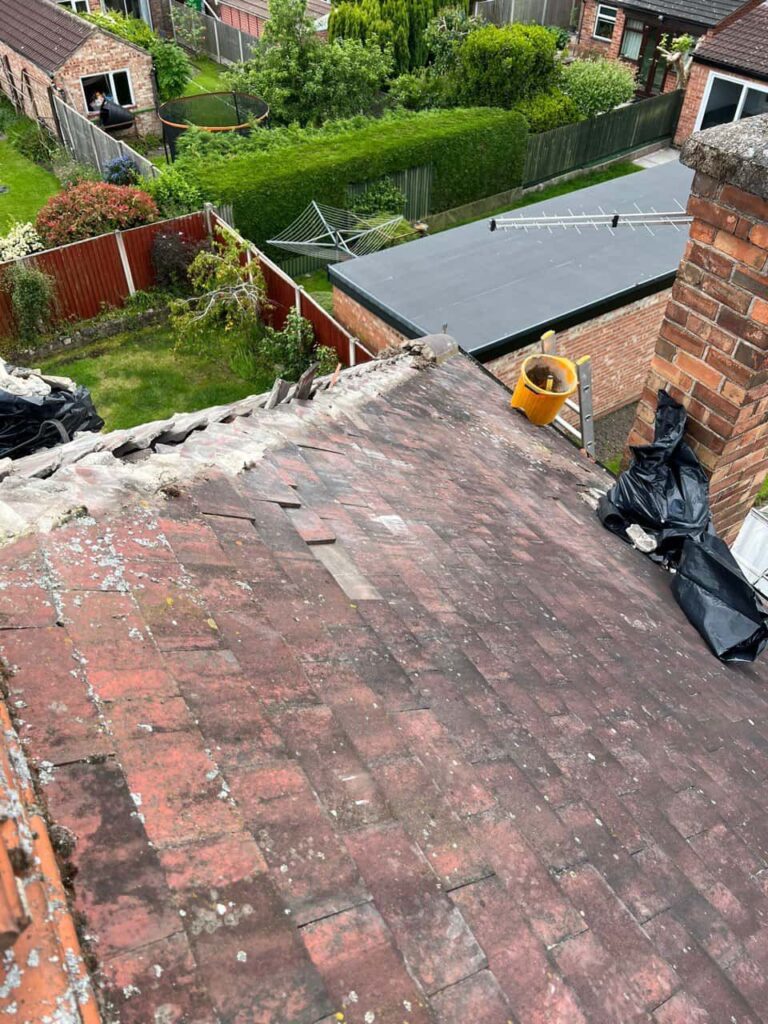
A visible leak does not always reveal the true location or cause of a roofing problem. Water can travel beneath tiles, along roofing membranes and through structural timbers before appearing inside a property. Treating only the obvious symptom may therefore leave the original defect unresolved.
A proper roof diagnosis examines how the entire roofing system is performing. By identifying the source of the problem before repair work begins, a roofer can recommend a focused solution that addresses the cause and helps prevent further damage.
For property owners in Windsor, Berkshire, this careful approach is essential to achieving a dependable roof repair rather than a temporary improvement.
Why Accurate Roof Diagnosis Matters
The Visible Damage May Not Be the Source
A damp patch on a ceiling can be some distance from the point where water entered the roof. The moisture may have travelled beneath the covering before reaching an opening around insulation, joists or ceiling boards.
Repairing the area directly above the internal stain may not stop the leak. A professional assessment traces the likely route of the water and checks vulnerable sections of the roof to locate its actual entry point.
Different Defects Can Produce Similar Symptoms
Several roofing problems may cause the same visible signs. Water ingress could result from:
- Slipped, cracked or missing tiles
- Damaged flashing around a chimney or roof junction
- Deteriorated mortar
- Blocked or defective drainage
- Worn underlay
- Failed joints on a flat roof
- Problems around roof windows, vents or other penetrations
Correctly distinguishing between these causes is important because each requires a different repair method. Replacing a tile will not resolve failed flashing, just as sealing an internal mark will not prevent water from entering through the roof.
Minor Defects Can Reveal Wider Problems
An isolated defect may appear straightforward, but it can sometimes be part of a broader issue. Several displaced tiles could indicate weakened fixings, deteriorated battens or movement within the roof covering. Repeated leaks around the same junction may suggest that an earlier repair addressed only part of the problem.
A thorough inspection establishes whether the damage is genuinely localised or whether connected components also need attention. This helps ensure the repair is appropriate to the roof’s overall condition.
Diagnosis Prevents Unnecessary Work
Accurate diagnosis is not only about finding hidden damage. It also helps determine which parts of the roof remain sound.
When a problem is confined to one area, a targeted repair may be sufficient. There is little value in disturbing serviceable materials when the fault can be resolved locally. Equally, repeatedly patching a roof with widespread deterioration may fail to provide a lasting result.
A professional assessment allows the scope of work to match the evidence found on the roof.
Weather Conditions Can Help Identify the Cause
The circumstances in which a leak appears often provide valuable clues. A problem that occurs only during wind-driven rain may involve an exposed junction or displaced covering. Water ingress after prolonged rainfall can point towards saturation, drainage issues or a defect that allows moisture to build gradually.
Information about when the leak started, where it appears and whether it changes with the weather can help guide the inspection. Combining these observations with a physical assessment leads to a more informed diagnosis.
A Complete Inspection Looks Beyond the Roof Covering
Tiles or slates form only one part of a roof. Effective diagnosis may also involve checking flashing, valleys, ridges, mortar, gutters, outlets, underlay and accessible roof timbers.
The inspection should consider how these components work together. A damaged gutter, for example, can direct water towards the building, while a worn valley may allow water beneath an otherwise sound covering. Assessing the full system reduces the risk of overlooking a connected defect.
The Repair Can Address the Underlying Cause
Once the source and extent of the problem are understood, the repair can be planned properly. This might involve refixing or replacing tiles, renewing defective flashing, repairing a vulnerable junction or restoring an affected section of the roof.
The aim is not simply to stop the immediate symptom. A well-planned repair should restore the roof’s ability to shed water effectively and protect the surrounding materials from continued moisture exposure.
Proper Diagnosis Supports Longer-Lasting Results
Repairs are more effective when the correct materials and techniques are selected for the specific defect. The existing roof type, pitch, condition and construction details can all influence the most suitable approach.
Professional diagnosis reduces guesswork. It enables the roofer to deal with both the visible damage and the reason it developed, which can lower the likelihood of the same problem returning.
Signs That Your Roof Needs Professional Assessment
A roof inspection should be considered if you notice:
- Damp marks on ceilings or walls
- Dripping water during rainfall
- Loose, slipped or missing tiles
- Staining around a chimney or roof window
- Sagging or discoloured roof timbers
- Repeated problems following earlier patch repairs
- Debris from tiles or mortar around the property
Prompt investigation can help contain the affected area before moisture reaches additional roofing or internal materials.
Conclusion
A successful roof repair begins with an accurate diagnosis. Because water can travel away from its entry point and several defects can create similar symptoms, repairing only what is immediately visible may not provide a lasting solution.
By inspecting the complete roofing system, identifying the underlying cause and establishing the true extent of the damage, a professional roofer can carry out a more focused and effective repair. If you have noticed signs of a roofing problem in Windsor, Berkshire, contact LS Roofing Windsor to arrange a professional assessment and receive clear advice on the most appropriate repair.
Call us on: 01753 251 592
Click here to find out more about LS Roofing Windsor
Click here to complete our contact form and see how we can help with your roofing needs.